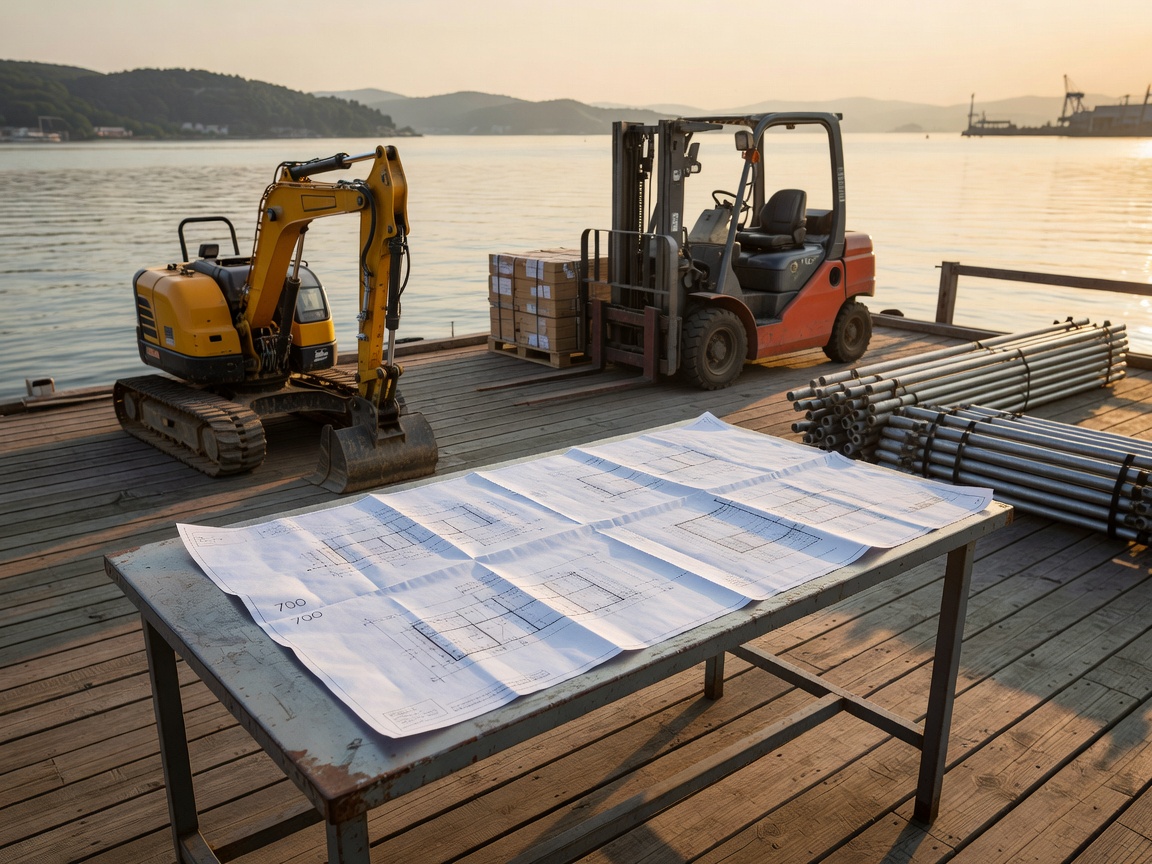
Define the task first
Write the intended result in plain language. State the location, work surface, material or activity, number of users and expected working period. Include setup and cleanup, not only productive hours.
Match equipment to the site
Compare equipment dimensions, weight, operating envelope, power, water, fuel, noise, drainage and storage needs with the actual site. Check doorways, gates, ramps, turning areas, overhead clearance and delivery vehicle access.
Selection should use manufacturer information and site procedures. Capacity, reach or rating must not be treated as a target to exceed. If the work involves lifting, electrical systems, structural elements, hazardous substances or underwater operations, bring in qualified specialists.
Schedule delivery and collection
Set a delivery window, receiving contact, unloading location and route to the work zone. Confirm whether familiarization, accessories, consumables or setup support are included. Collection should have an agreed date, condition standard and contact point.
Allow time for weather interruptions, restricted access, inspection and cleaning. A contingency plan may involve rescheduling, alternative equipment or a revised work sequence. Do not assume replacement equipment or extended availability.
Operators and records
Identify who is authorized to operate the equipment and who controls the site. Keep delivery and return records, visible-condition notes, accessory lists and fault reports. These records reduce ambiguity at handover.
Rental or purchase
Rental often suits short, irregular or specialist work. Purchase can suit predictable recurring use but requires storage, maintenance, inspection and capital planning. Compare total operational responsibility rather than only the initial rate, which may vary and is not stated here.
Pre-rental checklist
- Task, location, surface and intended result.
- Equipment dimensions, weight and operating limits.
- Power, water, fuel, drainage and storage.
- Delivery route, unloading point and receiving contact.
- Operator competence, site rules and documentation.
- Weather window, contingency and collection date.
- Return inspection, cleaning and damage reporting.
What to confirm before rental
Confirm the exact specification, accessories, documentation, rental period, delivery terms, collection terms and responsibilities in writing. Actual availability, pricing, site requirements and conditions may vary.
Related routes
Use the harbor rental overview, then narrow the brief through port handling, dock maintenance or waterfront access.