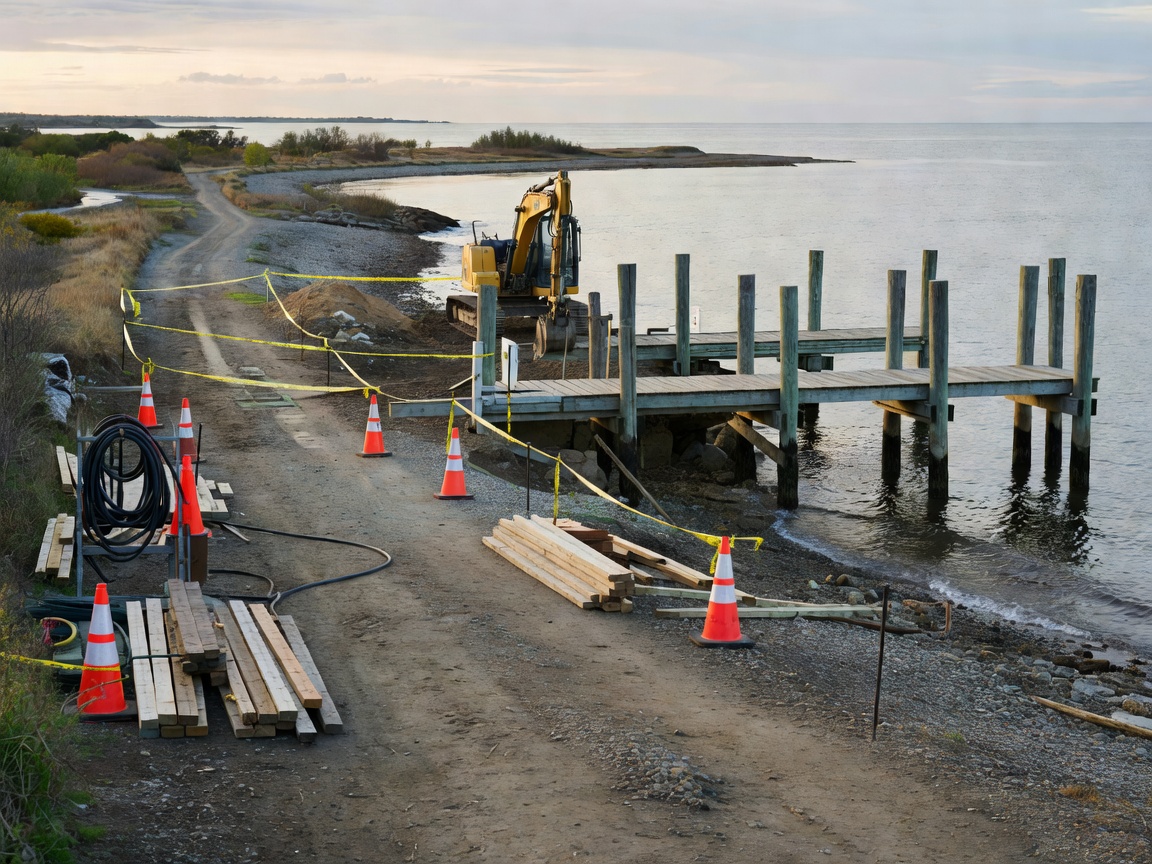
Define who needs access
Start with the people, tools and materials that must reach the work area. Separate pedestrian movement from equipment movement where possible. Identify whether access is for inspection, cleaning, maintenance, controlled delivery or emergency response.
Access equipment may include temporary route systems, edge-protection components, work-zone barriers and support equipment selected for a specific site. The category must be matched to the intended use, not improvised from unrelated materials.
Surface and weather controls
Record wet areas, algae, standing water, uneven surfaces, slopes, gaps, tide influence and vehicle interfaces. Weather can change traction, visibility, wind exposure and the safe operating window. Build a stop-work decision into the plan.
Never create an improvised temporary structure or use access equipment outside its manufacturer instructions. Structural assessment, work at height and marine safety decisions require qualified personnel and site-specific procedures.
Dimensions and constraints
Measure route width, headroom, turning areas, gates, ramps and the position of fixed assets. Consider equipment weight, storage footprint and how the system will be delivered without obstructing active operations.
Mark the work area and clarify who controls pedestrians, vehicles and visitors. Confirm lighting, communication and emergency arrangements with the responsible site team.
Setup and inspection
Setup responsibilities should be explicit. The receiving team should inspect delivered equipment for damage, missing parts and visible contamination before use. A competent person should confirm that the assembled arrangement is suitable for the planned use.
During the rental, keep inspection records and report movement, damage or changing conditions. Do not modify, extend or repurpose equipment without authorization.
Rental benefits and limits
Rental can support short maintenance windows and avoid permanent storage of temporary route equipment. Limitations include weather dependency, site-specific approval, transport dimensions and the need for competent setup. Confirm the actual rental specification and conditions before committing.
What to confirm before rental
- Users, task, route and work-zone boundary.
- Surface, slope, water, tide and weather exposure.
- Dimensions, storage and delivery route.
- Setup, inspection and supervision responsibilities.
- Pedestrian, vehicle and emergency controls.
- Return condition and reporting process.
Related routes
Pair this guide with dock maintenance equipment or the broader harbor rental guide.